
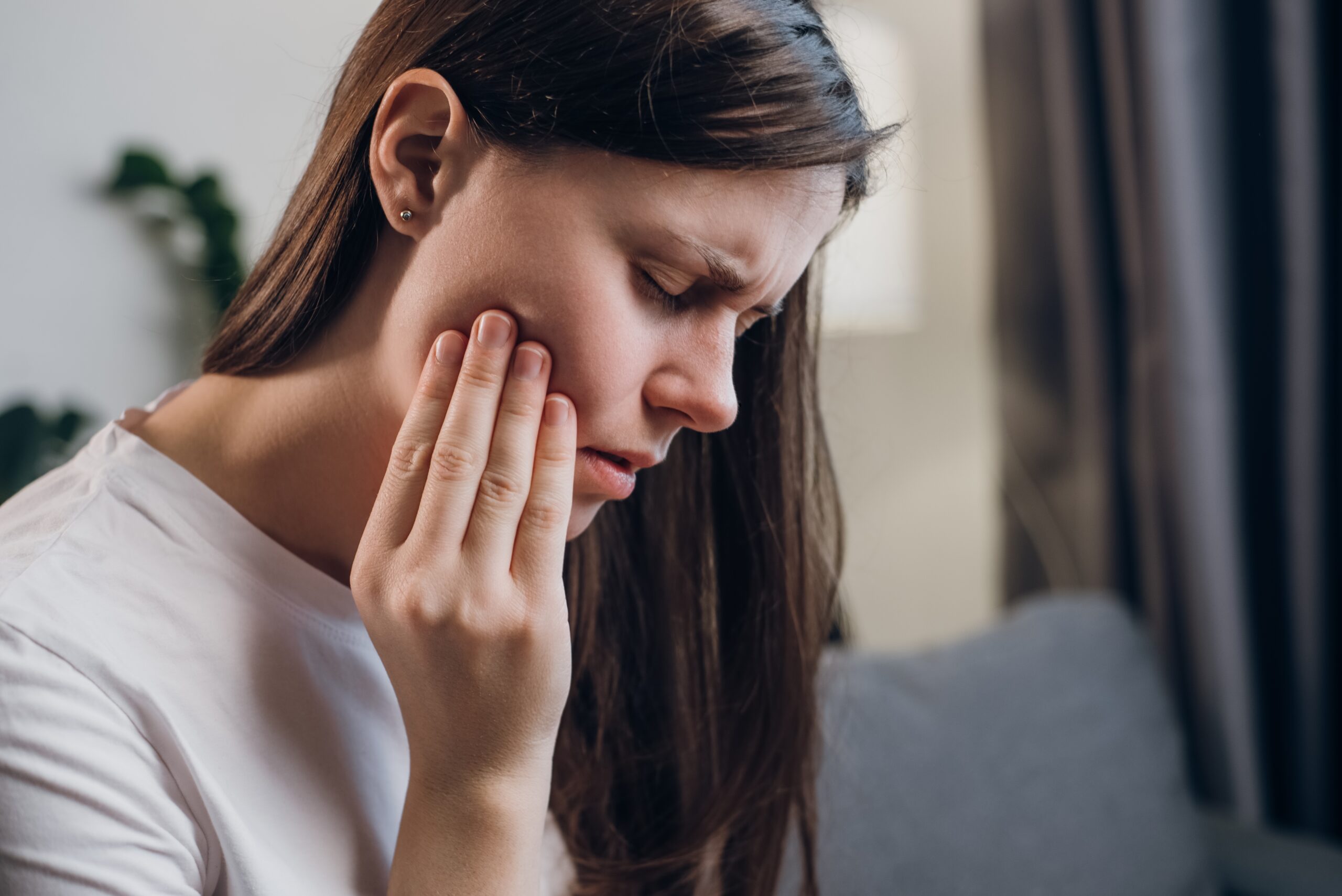
 Waking up with a sore jaw, dull headaches, or sensitive teeth can quickly ruin your morning. If you experience these symptoms regularly, you might be dealing with a temporomandibular joint (TMJ) disorder, bruxism, or a combination of both.
At St. Mary’s Dental in Mechanicsville, MD—proudly serving Charlotte Hall and Leonardtown—Dr. Gina McCray and Dr. Kara McCray Demer help patients identify the root cause of their jaw pain. Understanding the differences and overlaps between TMJ disorders and bruxism is the first step toward finding lasting relief.
What is Bruxism?
Bruxism is the medical term for teeth grinding and jaw clenching. Most people with this condition grind their teeth unconsciously while they sleep, though it can also happen during the day during moments of stress.
Common symptoms of bruxism include:
- Flattened, fractured, or chipped teeth
- Worn tooth enamel
- Increased tooth pain or sensitivity
- Tired or tight jaw muscles
What are TMJ Disorders?
Your temporomandibular joint acts like a sliding hinge connecting your jawbone to your skull. TMJ disorders occur when this joint, or the muscles surrounding it, become inflamed or damaged.
If you have a TMJ disorder, you might notice:
- Pain or tenderness in your jaw, face, or neck
- Difficulty or pain while chewing
- A clicking, popping, or grating sound when you open your mouth
- Your jaw locking in an open or closed position
The Overlap: How Bruxism and TMJ Connect
While bruxism is an action (grinding) and TMJ refers to a specific joint disorder, the two share a close relationship. Constant teeth grinding puts immense pressure on your jaw joints and surrounding muscles. Over time, chronic bruxism can actually cause a TMJ disorder. Conversely, a misaligned jaw joint can cause muscle tension that triggers unconscious teeth grinding. Because the symptoms overlap so heavily, securing a professional diagnosis is crucial for proper care.
The Importance of Treating Bruxism and TMJ
Ignoring jaw pain or grinding can lead to severe consequences for your oral health. Untreated bruxism wears down your protective enamel, increasing the risk of cavities, tooth fractures, and eventually tooth loss. Meanwhile, untreated TMJ disorders can lead to chronic facial pain, severe headaches, and permanent joint damage that restricts your ability to eat and speak comfortably.
Effective Solutions at St. Mary’s Dental
You do not have to live with chronic jaw pain or let grinding ruin your smile. Dr. Gina McCray and Dr. Kara McCray Demer offer highly effective treatments tailored to your specific needs.
Custom-Fit TMJ Mouthguards
A one-size-fits-all mouthguard from the pharmacy rarely provides adequate relief. A TMJ mouthguard from St. Mary’s Dental will be custom-fit to your unique smile. This customized oral appliance holds your jaw in its optimal resting position. By supporting proper alignment, it allows your strained muscles to fully relax, preventing nighttime grinding and providing significant pain relief.
Clear Aligner Therapy
Sometimes, both TMJ pain and bruxism stem from a misaligned bite. When your upper and lower teeth do not fit together correctly, your jaw muscles work overtime to compensate. We offer clear aligner therapy to discreetly and comfortably correct bite issues. Aligning your teeth relieves the uneven pressure on your jaw joint, effectively treating the root cause of your discomfort.
Take the First Step Toward Relief
Do not let jaw pain or worn teeth dictate your life. If you suspect you are dealing with a TMJ disorder or bruxism, reach out to St. Mary’s Dental. Our team is ready to help patients in Mechanicsville, Charlotte Hall, and Leonardtown achieve healthy, pain-free smiles. Contact us today to schedule your consultation and find the right solution for your jaw health.
Contact St. Mary’s Dental:
301-884-3248
Location (Tap to open in Google Maps):
28160 Old Village Rd
Mechanicsville, Maryland
20659
